
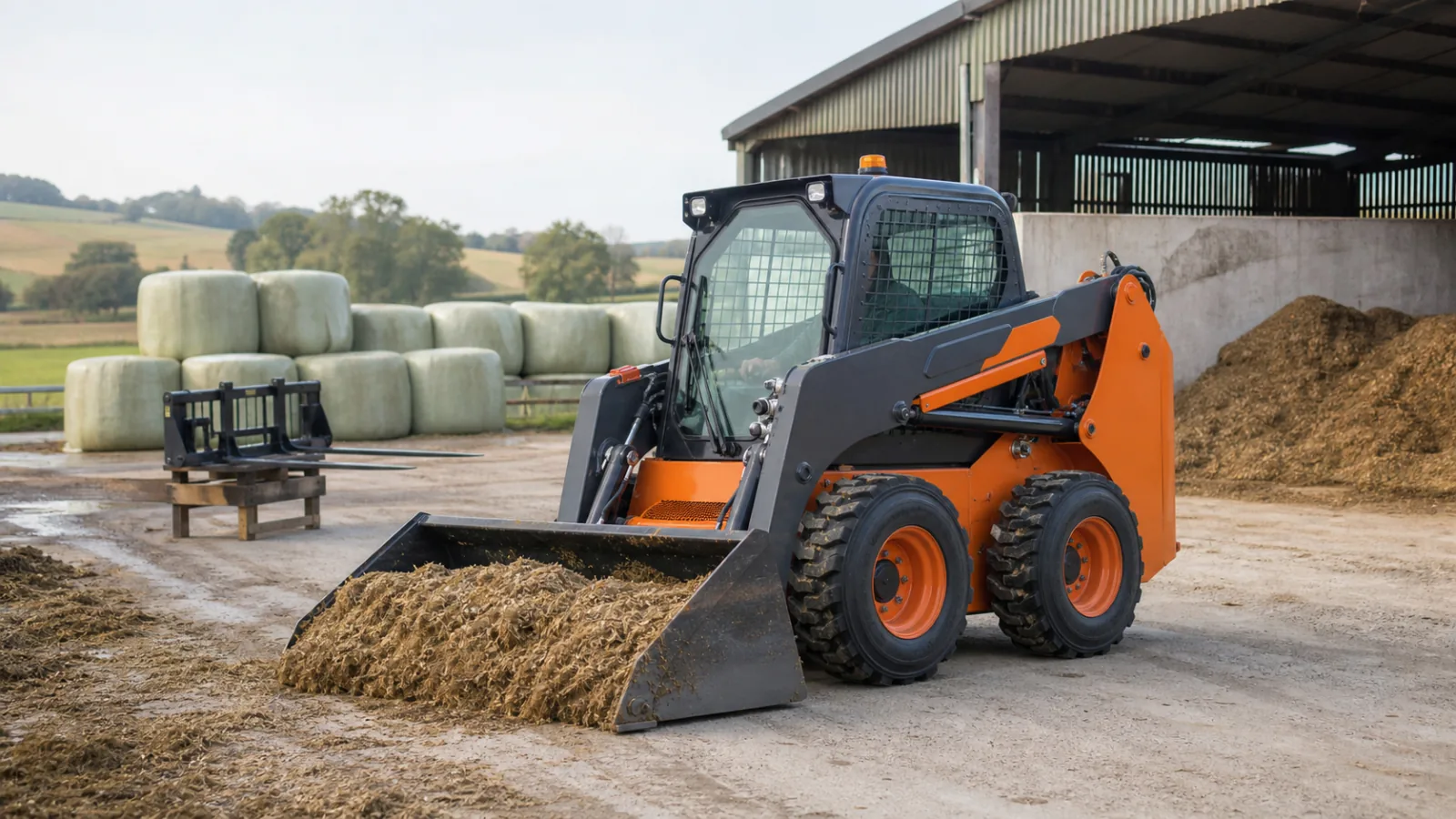
Choosing a loader for a farm means sizing it to the sheds and gateways it must fit, the loads it must lift, and the ground it works. A compact skid-steer loader handles feed, manure, bales, soil and yard cleanup from one machine, and switches jobs through its attachments. Wheeled models suit hard yards; tracked models float over wet fields. This guide covers sizing, wheels versus tracks, engines and attachments. HONGLI’s wheeled skid-steer range runs 380–1,500 kg, with a Euro 5 / EPA Tier 4 option on the compact HLY25.
Get a Quote · Chat on WhatsApp
FAQ
What size loader for a farm?
Size the loader to your gateways, the loads you lift and the ground you work. A compact skid-steer of 380–1,500 kg rated load handles feed, manure, bales and yard work on most farms; measure your tightest gate and heaviest load first.
Wheels or tracks?
Wheeled loaders suit hard, dry yards and cost less to run; tracked loaders float over wet fields and soft ground without sinking. Choose by the ground you work most of the year.
What engine and emissions?
HONGLI’s wheeled skid-steer range covers 380–1,500 kg, with a Euro 5 / EPA Tier 4 engine option on the compact HLY25 for markets that require it. Tell us your market and we confirm the emission rating.
Which attachments for feed and bales?
A bucket and pallet forks cover daily feed and bale work; a grapple handles silage and brush, and an auger drills fence holes. Most farm attachments run on standard hydraulic flow, so a mid-size loader covers the season.