
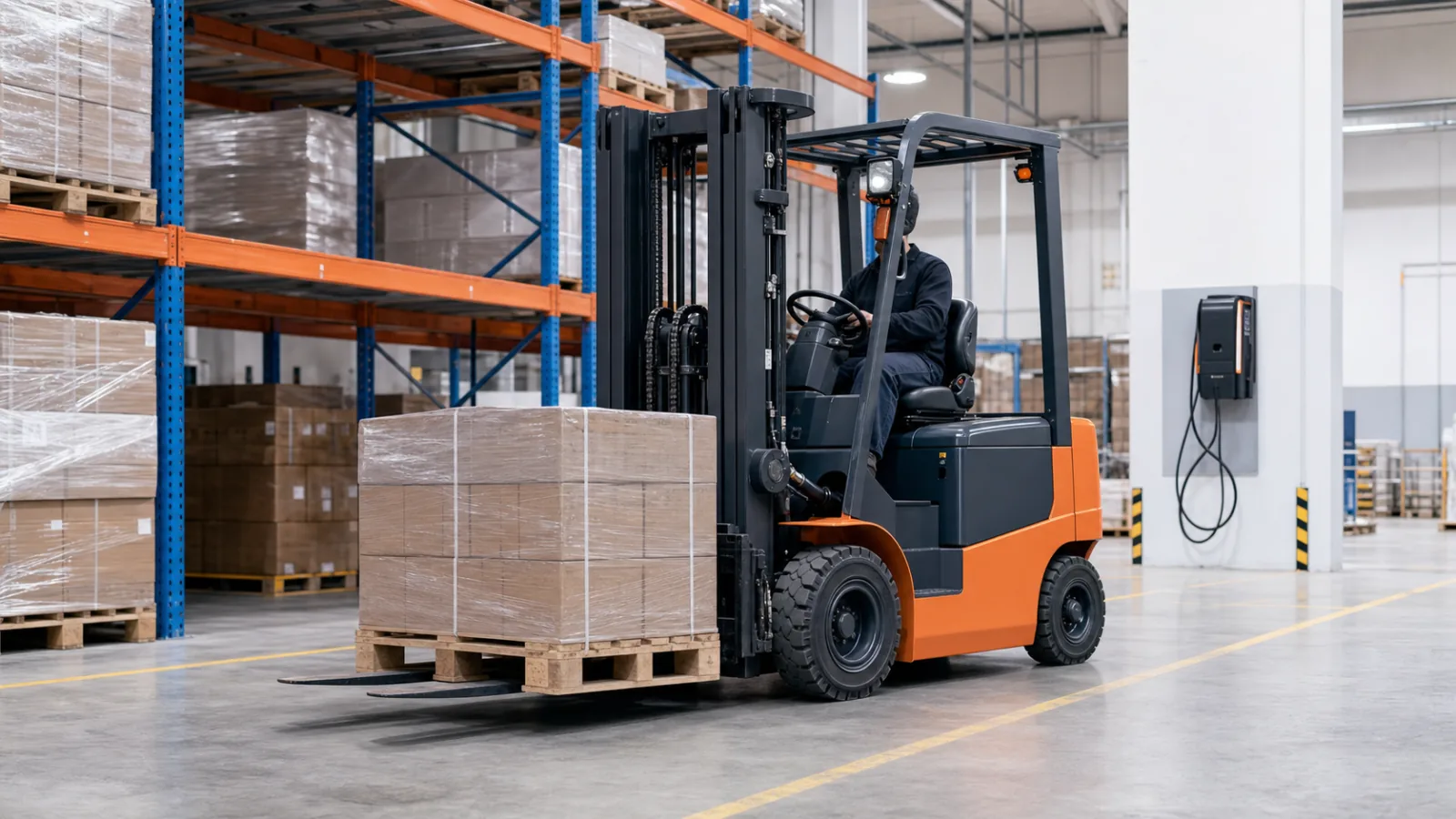
This guide helps warehouse operators, dealers and procurement buyers spec an electric forklift for export. Work through capacity and load centre, voltage and motor type, battery chemistry, charging setup, mast height and attachments — each decision narrows the model. HONGLI’s electric counterbalance range (1–5 t) runs on 60V, 72V or 80V depending on capacity, with a lead-acid battery as standard and a lithium upgrade optional; three-wheel models add a tighter turn. Bring your duty cycle and we will turn this guide into a quoted spec.
Get a Quote · Chat on WhatsApp
FAQ
What capacity and load centre do I need?
Start from the heaviest load you lift at the standard 500 mm load centre, then add a margin for the attachment and for loads carried further from the heel of the forks. HONGLI’s electric counterbalance range covers 1–5 t; send the load and we confirm the rated capacity at your load centre.
What voltage and battery?
HONGLI’s electric forklifts run at 60V on the 1–2 t models, 72V on the 2.5–3.5 t models and 80V on the 4–5 t models, which suits most indoor warehouse and handling duty, and a lead-acid battery comes as standard, sized to your shift.
Lead-acid or lithium?
Lead-acid costs less up front and suits single-shift work; lithium costs more but charges faster and lasts longer, paying back on multi-shift or opportunity-charging duty. HONGLI ships lead-acid as standard with a lithium upgrade optional — tell us your shift pattern.
How do I import one?
Send your capacity, voltage, battery and mast needs with your destination port and quantity, and HONGLI quotes FOB factory-direct. Add your own freight, duty and clearance to compare the landed cost against a local-brand truck.