
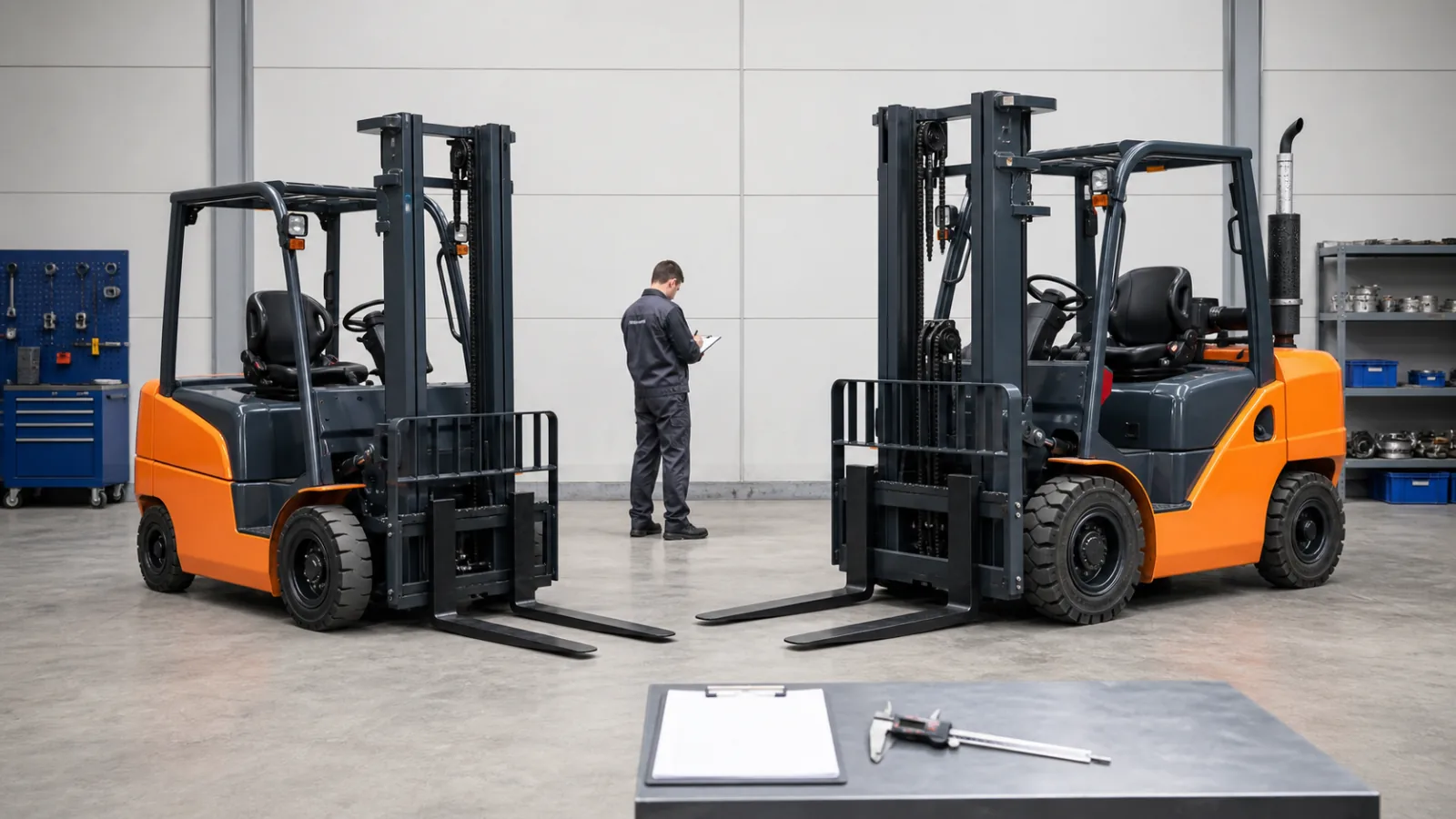
Comparing forklift suppliers is less about logos and more about five things: is it a factory or a trader, do the specifications match your duty, how fast and reliable is parts support, what is the real lead time, and how does landed price compare. A factory sells direct without a trading markup and owns its quality and parts; a trader resells. This guide gives a framework to judge any supplier — including how a factory-direct China builder like HONGLI compares on price, MOQ and after-sales.
Get a Quote · Chat on WhatsApp
FAQ
Factory or trader — how do I tell?
Ask who builds the machine. A factory quotes from its own production line, names its engine and component suppliers, and invites a plant visit; a trader resells other factories’ machines and adds a markup. A factory address, a production licence and consistent model data point to the real builder.
What specs should I compare?
Compare rated capacity at your load centre, power type and engine brand, mast and lift height, tyres, and the certificates your market needs. Match each to your duty rather than to the headline price — an under-spec’d cheap truck costs more over its life.
Why does parts support matter?
A machine without a parts line sits idle the first week a part fails. Ask how fast wear parts and standard parts ship, and how long the model stays supported after you buy — support, not the sticker price, sets the real cost of ownership.
How does HONGLI compare?
HONGLI builds its forklifts and loaders in its own factory in Tai’an and sells direct, without a trader’s markup, from a one-unit MOQ. You get factory pricing, named engines (XINCHAI, QUANCHAI), a 12-month warranty and a stocked parts line — ask for a quote against your local brand to see the gap.