
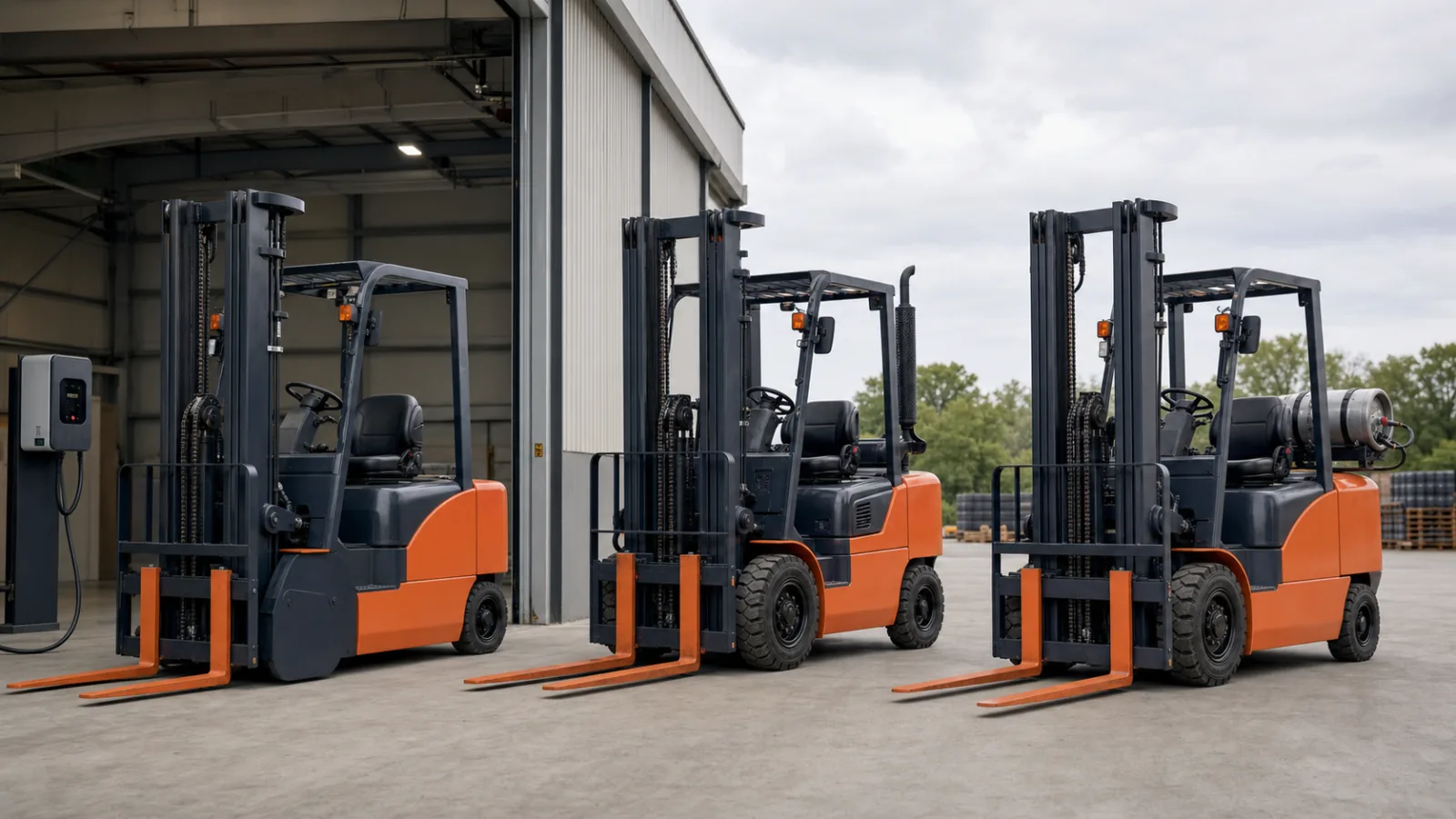
Pick an electric forklift for indoor, low-noise work, a diesel forklift for heavy outdoor yards, and an LPG forklift when you need indoor-outdoor flexibility with quick refuelling. The choice comes down to three things: where the truck works, how many hours it runs each day, and what it lifts. Electric trucks cost more up front but far less per hour; diesel trucks refuel in minutes and pull harder on rough ground; LPG sits between the two. This guide compares all three on running cost, emissions, noise, refuelling and best use, then maps each to a real machine class. One sourcing note: HONGLI currently builds electric forklifts (1–5 t) and diesel forklifts (2–10 t), factory-direct from the plant in Tai’an, Shandong.
Fuel type at a glance (comparison table)
| Electric | Diesel | LPG | |
|---|---|---|---|
| Best for | Indoor: warehouses, cold storage, food | Outdoor: yards, ports, rough ground | Mixed indoor / outdoor |
| Emissions (at the truck) | Zero | Exhaust — cut by EPA / EU Stage engines | Lower than diesel, some exhaust |
| Noise | Low | High | Medium |
| Refuel / recharge | Charge 6–8 h, or opportunity / lithium [typical] | Refuel in minutes | Swap cylinder in minutes |
| Running cost per hour | Lowest | Higher (fuel) | Higher (gas) |
| Up-front cost | Higher (battery) | Lower | Medium |
| Typical capacity | 1–5 t (HONGLI range) | 2–10 t (HONGLI range) | 1.5–7 t [industry] |
When electric wins
Indoor air and noise rules favour electric: zero exhaust at the truck, low noise, and the lowest cost per hour. A lead-acid pack charges in 6–8 hours; a lithium pack charges faster and suits multi-shift work [typical]. HONGLI’s electric range covers 1 to 5 tons on AC drive motors.
When diesel wins
Outdoor yards, ramps and long shifts favour diesel: it refuels in minutes and pulls harder on rough, uneven ground. The trade-off is exhaust and noise. EPA and EU Stage compliant engines are available for regulated markets. HONGLI’s diesel range covers 2 to 10 tons.
Where LPG fits
LPG forklifts refuel by cylinder swap in minutes and run indoors or out with less exhaust than diesel, at a higher running cost than electric. They suit operations that move between a warehouse and a yard and cannot stop to recharge. HONGLI currently builds electric and diesel forklifts; for mixed indoor-outdoor work, an electric truck with a spare battery or a compact diesel is the factory-direct option.
FAQ
Is an electric or diesel forklift cheaper to run?
Electric is cheaper per hour — lower energy cost and less maintenance. Diesel costs more in fuel but less up front.
Can an electric forklift work outdoors?
Yes, on hard, dry ground. For heavy, rough or wet outdoor work, a diesel forklift is the better fit.
Which forklift types does HONGLI offer?
HONGLI currently offers electric and diesel forklifts factory-direct; contact sales for other configurations.
Which fuel type has the lowest emissions?
Electric has zero exhaust at the truck. Among combustion types, LPG emits less than diesel; EPA / EU Stage diesel engines cut diesel emissions for regulated markets.
Related: /forklifts/electric-forklift/ · /forklifts/diesel-forklift/ · /blog/electric-vs-diesel-forklift/ · /get-a-quote/