
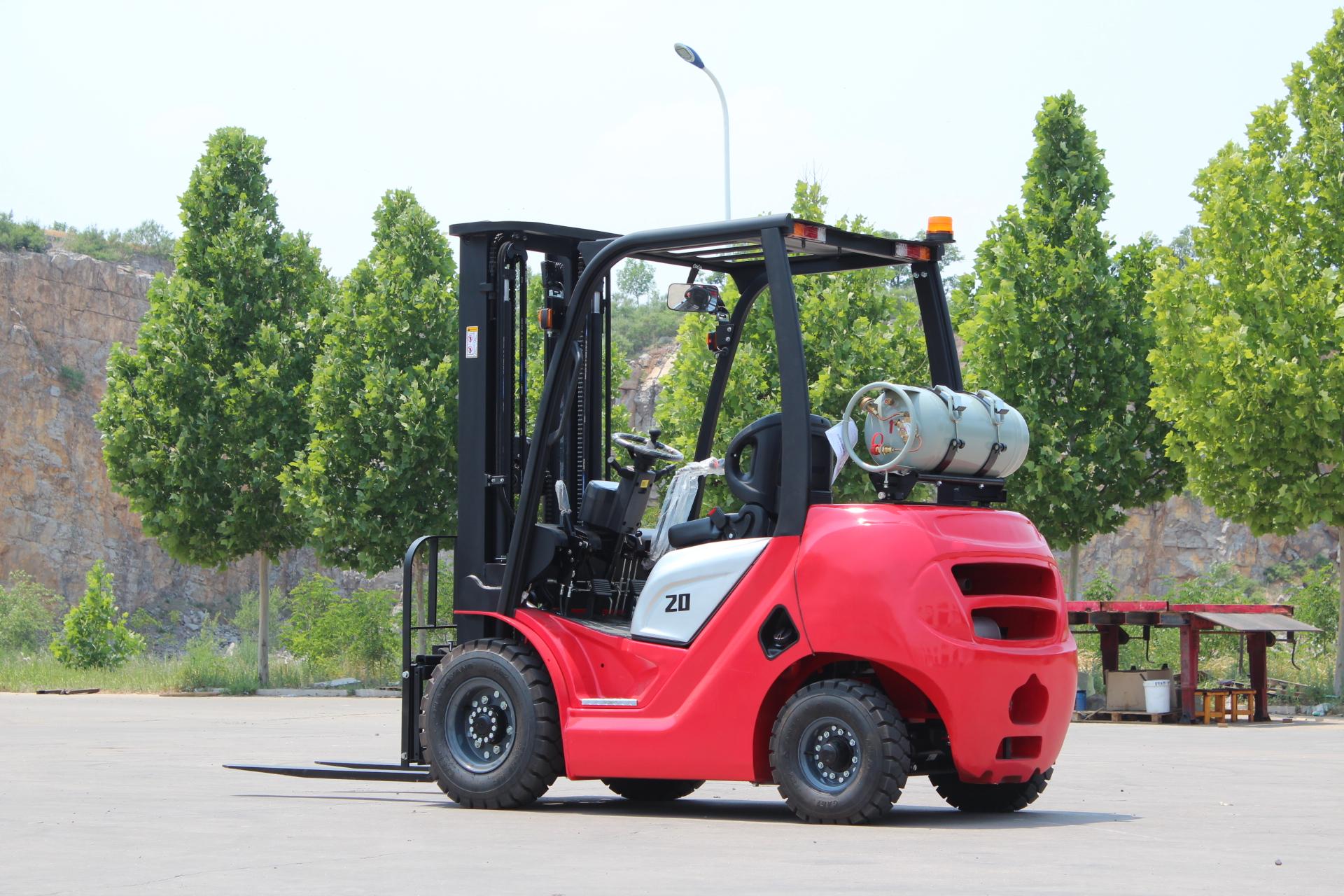
A forklift attachment can make a truck far more productive, but it can also reduce the weight the truck can safely lift. A 3-ton forklift does not automatically remain a 3-ton forklift after a sideshifter, fork positioner, clamp, rotator, or fork extension is installed.
The reason is not simply the weight of the attachment. An attachment may move the load farther forward, change the combined centre of gravity, add hydraulic functions, reduce visibility, and alter stability at height. The capacity shown on the truck’s original nameplate may therefore no longer describe the finished configuration.
This guide explains residual capacity in practical purchasing terms: what changes, what information a supplier needs, and what must be confirmed before a truck with an attachment enters service.
What Is Residual Capacity?
Residual capacity is the capacity available after the actual mast, lift height, load centre, and attachment configuration have been considered. It is sometimes called de-rated capacity or net capacity.
It is different from the headline capacity used to describe a forklift model. Headline capacity is normally rated at a specified load centre and lift height with a defined fork carriage. Change any of those conditions and the usable capacity may change.
The correct operating limit is the capacity stated for the completed truck configuration on its approved capacity plate. A sales brochure, a rough calculation, or the capacity stamped on the attachment itself cannot replace that rating.
Why Attachments Reduce Forklift Capacity
1. The attachment adds weight in front of the truck
A sideshifter, clamp, or rotator has its own mass. That mass is carried by the mast before the truck picks up any product. It uses part of the truck’s available lifting ability and changes the combined centre of gravity.
2. The load moves farther forward
Most attachments add thickness between the fork carriage and the load. This distance is often described as lost load centre or effective thickness. Even a modest forward movement increases the load moment acting against the truck.
The basic relationship is easy to understand: load moment equals load weight multiplied by its horizontal distance from the reference point. If the distance increases, the allowable weight generally has to decrease. For a fuller explanation, see our guide to forklift capacity and load centre.
3. Lift height changes the stability requirement
A truck may handle a load close to the floor but have a lower permitted capacity at maximum lift. Tall masts, free-lift arrangements, side shift at elevation, and non-standard load shapes all need to be included in the manufacturer’s rating.
4. The attachment changes how the load is supported
A paper-roll clamp, bale clamp, drum handler, push-pull, or rotator does not support a load in the same way as standard forks. Clamping force, load shape, rotation, hydraulic pressure, and lateral movement introduce conditions that a simple fork-capacity figure does not describe.
Why Simple Subtraction Is Not Enough
A common shortcut is to subtract the attachment’s weight from the truck’s rated capacity. That is incomplete because it ignores the forward shift in load centre, lift height, mast configuration, and the truck’s own stability characteristics.
For example, OSHA shows a capacity plate with a 5,000 lb rating for forks and a 4,500 lb rating when a sideshifter is fitted. The 500 lb difference is the approved result for that particular truck and configuration; it is not a universal percentage that can be copied to another model.
Use calculations only for early screening. The forklift manufacturer or an authorised supplier should issue the final rated capacity for the exact truck, mast, attachment, and load-centre combination.
How Common Attachments Affect Selection
Sideshifter
A sideshifter lets the operator move the forks laterally without repositioning the truck. It usually adds less weight and thickness than a clamp or rotator, but it still changes the rating. Specify the expected side-shift range and whether lateral movement is allowed at full lift.
Fork positioner
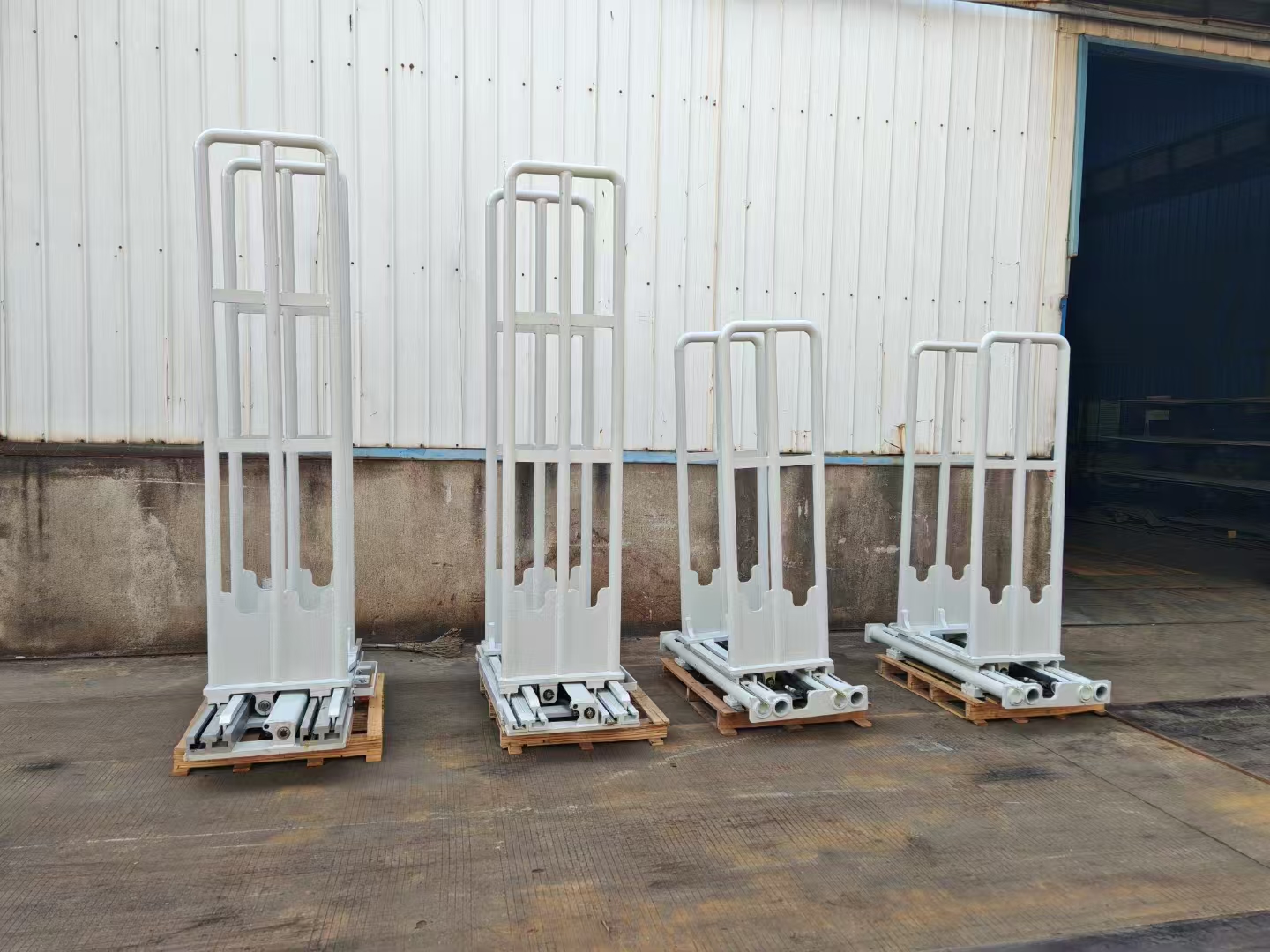
A fork positioner improves productivity where pallet widths change frequently. Its frame, cylinders, and fork arrangement add mass and thickness. Confirm fork length, minimum and maximum spread, carriage class, and whether an integrated sideshift function is included.
Fork extensions
Extensions can help support long loads, but they do not increase the capacity of the forks or truck. A longer load commonly moves its centre of gravity forward. Check the extension-to-fork relationship, load support, load centre, and the truck manufacturer’s approval.
Clamps
Carton clamps, bale clamps, paper-roll clamps, and drum clamps replace or supplement forks. Selection requires the load’s dimensions, weight range, surface condition, required opening range, contact-pad design, and suitable clamping force. Too little force may drop the load; too much may damage it.
Rotators and push-pulls
Rotators add a rotary mechanism and often handle loads with a changing centre of gravity. Push-pull attachments allow slip-sheet handling but add reach and hydraulic movement. Both require a configuration-specific capacity assessment rather than a catalogue-only selection.
Seven Details Your Supplier Needs
- Actual load weight: include the product, pallet, stillage, bin, or container—not an average estimate.
- Load dimensions and centre of gravity: length in the fork direction is especially important. State if the load is uneven or liquid.
- Required lift height: provide both maximum fork height and any stacking height that must be reached with the attachment operating.
- Attachment type and functions: sideshift, clamp, rotate, position, push, pull, or multiple functions.
- Attachment data: weight, effective thickness or lost load centre, opening range, carriage class, and hydraulic requirements.
- Truck and mast: exact model, serial/configuration information, mast type, lowered height, and existing carriage.
- Operating environment: aisle width, floor, temperature, dust or moisture, traffic, load visibility, and daily duty cycle.
If the truck has not yet been ordered, specify the attachment and load at the same time as the forklift. It is usually safer and more economical to rate the complete system during selection than to retrofit an attachment later and discover that the truck is too small.
Capacity Plate and Approval: What Must Change?
An attachment that affects safe operation or capacity requires the truck’s rating information to match the new configuration. In the United States, OSHA requires manufacturer approval for modifications and additions that affect capacity or safe operation, and the plates, tags, or decals must be changed accordingly. The UK’s HSE guidance likewise states that attachments may require de-rating and a new capacity plate before use.
Requirements vary by country, so the local employer, importer, or equipment owner must confirm the applicable rules. The practical principle is consistent: the operator needs a clear, legible capacity plate that describes the truck as it is actually equipped.
Before the attachment enters service
- Obtain written approval or rating data for the exact configuration.
- Fit the correct capacity plate and identification information.
- Verify mounting, locking, hoses, fittings, and hydraulic pressure.
- Check visibility and any additional camera or warning-device needs.
- Train and authorise operators for the attachment and load type.
- Add the attachment to daily and planned inspection routines.
Common Buying Mistakes
Ordering by forklift tonnage alone. “3 ton” is not enough. Load centre, height, mast, and attachment determine whether the finished truck meets the job.
Buying the attachment after the truck. A low-cost attachment may create an expensive problem if the truck cannot be approved at the required capacity.
Using the heaviest load but not the longest load. A lighter but longer load can create a greater load moment than a compact heavy pallet.
Ignoring hydraulic compatibility. Flow, pressure, number of functions, hose routing, and control method all affect performance and installation.
Assuming the attachment’s capacity is the system capacity. The attachment, forks, carriage, mast, tyres, and truck each have limits. The complete system is governed by the approved configuration and its lowest applicable limit.
Operating an unloaded truck as if the attachment weighs nothing. A heavy attachment changes the truck’s behaviour even with no product held. Braking, turning, slopes, and visibility require operator attention.
A Better Purchase Sequence
- Document the heaviest, longest, highest, and most difficult loads.
- Select the handling method and attachment type.
- Confirm attachment weight, thickness, mounting, and hydraulics.
- Ask the truck supplier to rate the complete configuration at the required height and load centre.
- Review aisle, turning, visibility, tyre, and power requirements.
- Approve the quotation only when the capacity plate data and attachment specification are identified.
- Inspect, commission, and train before production use.
If you are still choosing the base truck, our guide What Size Forklift Do I Need? helps define capacity, height, and operating conditions before requesting a quotation.
Frequently Asked Questions
Does a sideshifter reduce forklift capacity?
Usually, yes. It adds weight and thickness ahead of the carriage. The amount of reduction depends on the exact truck, mast, sideshifter, load centre, and lift height, so use the approved capacity plate rather than a general percentage.
Can I calculate residual capacity myself?
You can make an initial load-moment estimate, but it is not a final engineering rating. The forklift manufacturer or authorised supplier should confirm the approved capacity for the complete configuration.
Do fork extensions reduce capacity?
They can reduce usable capacity because the load may be supported farther forward. Extensions also have their own limits and installation rules. Confirm the real load centre and obtain approval for the intended arrangement.
Can any attachment fit any forklift?
No. Carriage class, capacity, mounting, hydraulic flow and pressure, number of functions, visibility, and the approved truck rating must all match.
Is the attachment’s rated capacity enough?
No. It only describes the attachment under its stated conditions. The truck-and-attachment combination must also have sufficient approved residual capacity at the required load centre and lift height.
What information should I send for a quotation?
Send the load weight and dimensions, lift height, attachment function, daily hours, site conditions, destination country, and—if modifying an existing truck—the model, mast, carriage, current capacity plate, and clear photographs.
Request a Configuration Check
HONGLI supplies forklifts with sideshifters, fork positioners, clamps, rotators, extensions, and other application-specific equipment. We can review the truck and attachment together before quotation so capacity, mounting, hydraulics, and operating requirements are aligned.
Need an attachment-ready forklift? Send us your load dimensions, weight, lift height, and required attachment. We will match the configuration and identify the information needed for the final capacity rating.
Safety References
This article is a purchasing guide, not an engineering capacity determination. Always follow the truck manufacturer’s approved rating and local regulations. See OSHA’s guidance on forklift attachments, capacity plates, and load composition and load moment, plus the HSE’s Approved Code of Practice for lift trucks.