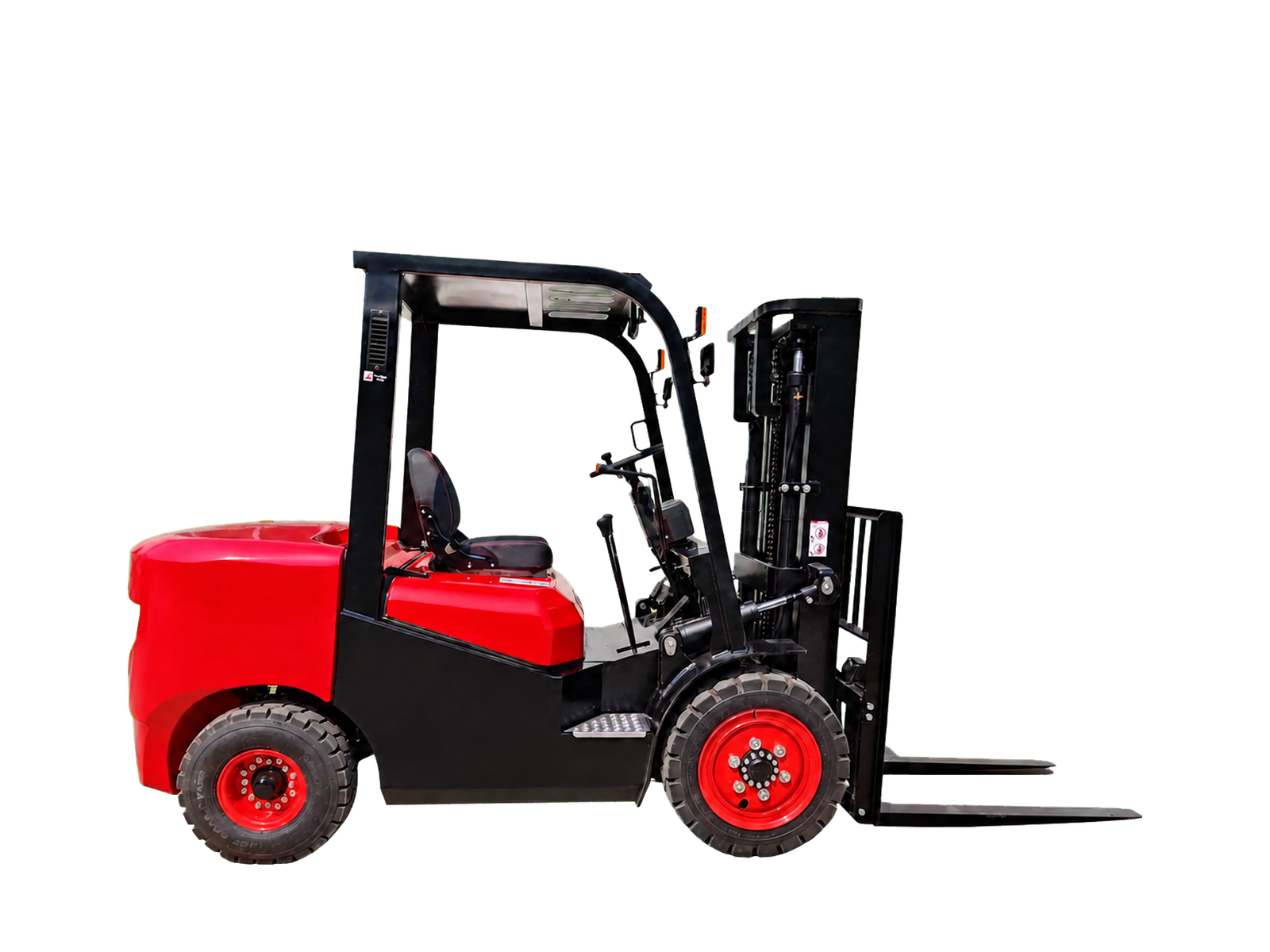
When to Choose the 3 Ton Diesel Model
Choose the HLCPC30 when verified loads require more margin than a 2.5 ton forklift and the workplace favors diesel refuelling, outdoor travel and pneumatic tyres.
- Check load weight, dimensions and centre of gravity.
- Compare the 2,530 mm turning radius with working space.
- Describe slopes, travel distance, surface and daily hours.
Load Centre, Mast and Attachment Check
The 3,000 kg rating applies at a 500 mm load centre. Longer loads, higher masts and attachments can reduce residual capacity.
- Provide maximum load and dimensions.
- State required lift height and lowered mast clearance.
- Identify fork length, side-shifter, clamp or other attachments.
Engine, Tyres and Site Conditions
The source specification lists a XINCHAI C490BPG engine rated at 40 kW and pneumatic tyres, with solid tyres optional. The final engine and tyre configuration must match destination requirements and the site.
- Provide required emissions standard.
- State puncture risk, debris, mud and pavement condition.
- Confirm cab, lighting and weather-related options.
Export, Packing and Support
The quotation should identify engine, mast, tyres, forks, attachments, packing, Incoterm, destination port, warranty scope and documents. Keep model and serial information for later parts identification.
MOQConfirm with configuration
Lead TimeConfirm with configuration
Warranty12 months
CertificateAvailable on request
What is the rated capacity of the HLCPC30?
The rated capacity is 3,000 kg at a 500 mm load centre. Usable capacity must be checked for long loads, high lifts and attachments.
How does the HLCPC30 differ from the HLCPC25?
The HLCPC30 has a 3,000 kg rating and larger chassis dimensions. Choose by actual load, load centre, turning space, surface and required capacity margin.
What engine and tyres does it use?
The source specification lists a XINCHAI C490BPG 40 kW engine and pneumatic tyres, with solid tyres optional. Confirm destination and site requirements.
Is it suitable for slopes and rough surfaces?
Provide the actual gradient, surface, load and travel pattern. The published source gradeability is 15% laden and 20% unladen, but site suitability must be reviewed.
What are the MOQ and lead time?
MOQ and lead time depend on engine, mast, tyres, attachments, branding and quantity. They are confirmed in the model-specific quotation.
What should be included in the RFQ?
Include load dimensions, load centre, lift height, surface, slope, daily hours, engine standard, tyres, attachments, quantity and destination port.