
Search for the most reliable forklift brand and you will find rankings. What you will rarely find is an explanation of what those rankings are measuring, or why two trucks from the same manufacturer can behave completely differently after three years.
Reliability is not a brand attribute. It is the result of specification, working environment, and maintenance discipline — and the same badge covers trucks configured very differently. A premium-brand truck specified for indoor warehouse duty and then run in a wet outdoor yard will fail sooner than a mid-tier truck specified correctly for that yard.
This guide covers what actually drives long-term forklift reliability, how to evaluate a manufacturer you are not familiar with, and where brand premium genuinely buys something.
The Five Things That Actually Determine Service Life
1. Power system sourcing
On diesel trucks: which engine, and is it an established industrial diesel with a global parts network? Engine brand matters less than most buyers assume for reliability itself, and more than they assume for parts availability. A well-maintained engine of almost any reputable make will outlast the truck’s other systems. A well-maintained engine you cannot get filters for will not.
On electric trucks: the motor and controller are the equivalent question, and the battery is a separate consideration entirely. Lead-acid batteries are consumables with a defined service life; lithium packs last considerably longer but the battery management system becomes a component you depend on.
What to ask: the exact engine or motor model, and where the nearest parts source is.
2. Hydraulic system grade
The hydraulic system does the actual work — lifting, tilting, and any attachment function. It is also where most in-service problems originate.
Three things separate a durable hydraulic system from a marginal one: pump and valve quality, hose routing and protection, and filtration. The third is the one nobody asks about and the one that most affects service life. Contaminated hydraulic oil destroys pumps and valves progressively, and a truck with inadequate filtration will develop hydraulic problems regardless of how good the components were when new.
What to ask: pump type, filtration specification, and hose routing — whether hoses are clamped and protected where they pass through the mast and chassis.
3. Mast, chains, and rollers
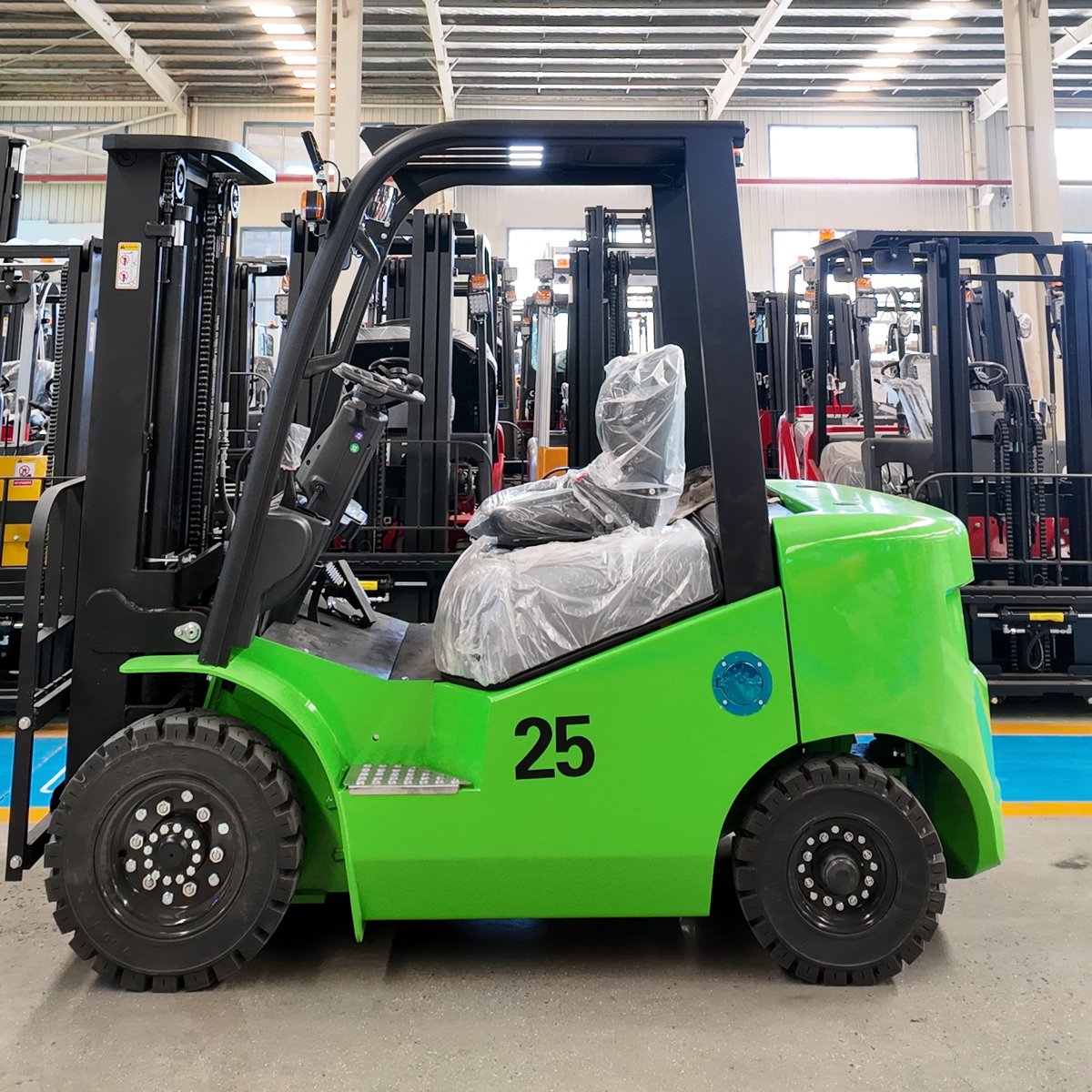
This is the system buyers inspect least and that fails most visibly.
Mast channels wear. Chains stretch. Rollers develop flat spots and bearing play. On a truck working high lift cycles daily, these are the components that determine whether the mast still runs smoothly at 5,000 hours or judders and binds.
Signs of a well-built mast: clean straight channels, chains with proper anchoring and adjustment provision, and rollers that are accessible for inspection and replacement without dismantling the mast.
What to ask: chain specification, roller type, and whether the mast can be serviced without specialist tooling.
4. Electrical system protection
Forklifts work in dust, moisture, temperature swings, and vibration. The electrical system is where those conditions do their damage.
What matters: connector quality and sealing, wiring loom routing and protection, controller mounting and cooling, and ingress protection ratings on components exposed to the working environment.
This is particularly important on electric trucks, where the controller and its connections carry substantial current and a corroded connection becomes a fault rather than an inconvenience.
What to ask: IP ratings on the controller and main connectors, and whether the loom is routed away from heat and abrasion points.
5. Parts availability and documentation
The most reliable truck in the world is unavailable if you cannot get a part for it.
What to ask: does the supplier provide a parts catalogue with part numbers? Where is the nearest stock of common wear items — filters, seals, chains, rollers, contactors? What is the lead time?
A manufacturer that supplies a parts catalogue with part numbers is a manufacturer expecting you to order parts from them for years. One that says “parts are available” without documentation is not thinking that far ahead.
Where Brand Premium Genuinely Buys Something
Established manufacturers charge more, and in several areas the premium is real.
Consistency. Mature manufacturers run highly standardised production. Two trucks of the same model built a year apart will be essentially identical. This matters more than it sounds — variance is a risk that is difficult to price in advance, and reducing it has genuine value.
Dealer and service infrastructure. Where a manufacturer has dense local coverage, the practical difference is measured in hours of downtime rather than in the specification sheet. For operations that cannot tolerate a truck being out of service, this is often worth the whole premium on its own.
Residual value. Recognised brands hold value better on secondary markets, largely because the next buyer recognises the name and can source parts. If your ownership model involves replacing trucks every few years, some of the premium comes back at disposal.
Refinement. Control feel, noise levels, operator ergonomics, and visibility from the seat. These are areas where accumulated engineering iteration shows, and they affect operator fatigue and productivity over long shifts.
What the premium does not automatically buy: an engine that lasts longer, a mast that wears more slowly, or hydraulics that tolerate contamination better than a well-specified alternative. Those come from specification and maintenance, and they can be specified into a mid-tier truck.
How to Evaluate a Manufacturer You Do Not Know
Most buyers know how to assess an established brand — the information is public and the dealer is nearby. The harder question is how to assess a manufacturer you have not dealt with before.
The questions below are the ones we would want a buyer to ask us, and the way they are answered tells you as much as the answers themselves.
“What is the exact model designation of the engine or motor, and the controller?” A supplier who cannot produce this quickly either does not know or does not want to say. Neither is reassuring.
“What emission certification does this configuration carry for my market?” For diesel trucks in regulated markets. Brand name alone does not establish compliance — the specific engine family, model year, and certificate coverage must be confirmed for your destination.
“What is the hydraulic filtration specification?” Tests technical depth. A salesperson without engineering support will answer with adjectives.
“Can you send a parts catalogue with part numbers?” The single most revealing request. Availability of this document predicts whether you will be able to keep the truck running in year four.
“What is the battery specification and expected service life, and what are the charging requirements?” For electric trucks. Vague answers here mean expensive surprises later.
“Can you provide references in my region, and photographs of a machine matching my specification before it ships?” Not every manufacturer can supply regional references, and inability is not disqualifying for a newer export relationship. Willingness to try tells you something.
“What documentation ships with the truck?” Expect: operation manual, parts catalogue, engine or motor identification details, compliance documentation where applicable, and inspection records.
What to Inspect on the Truck Itself
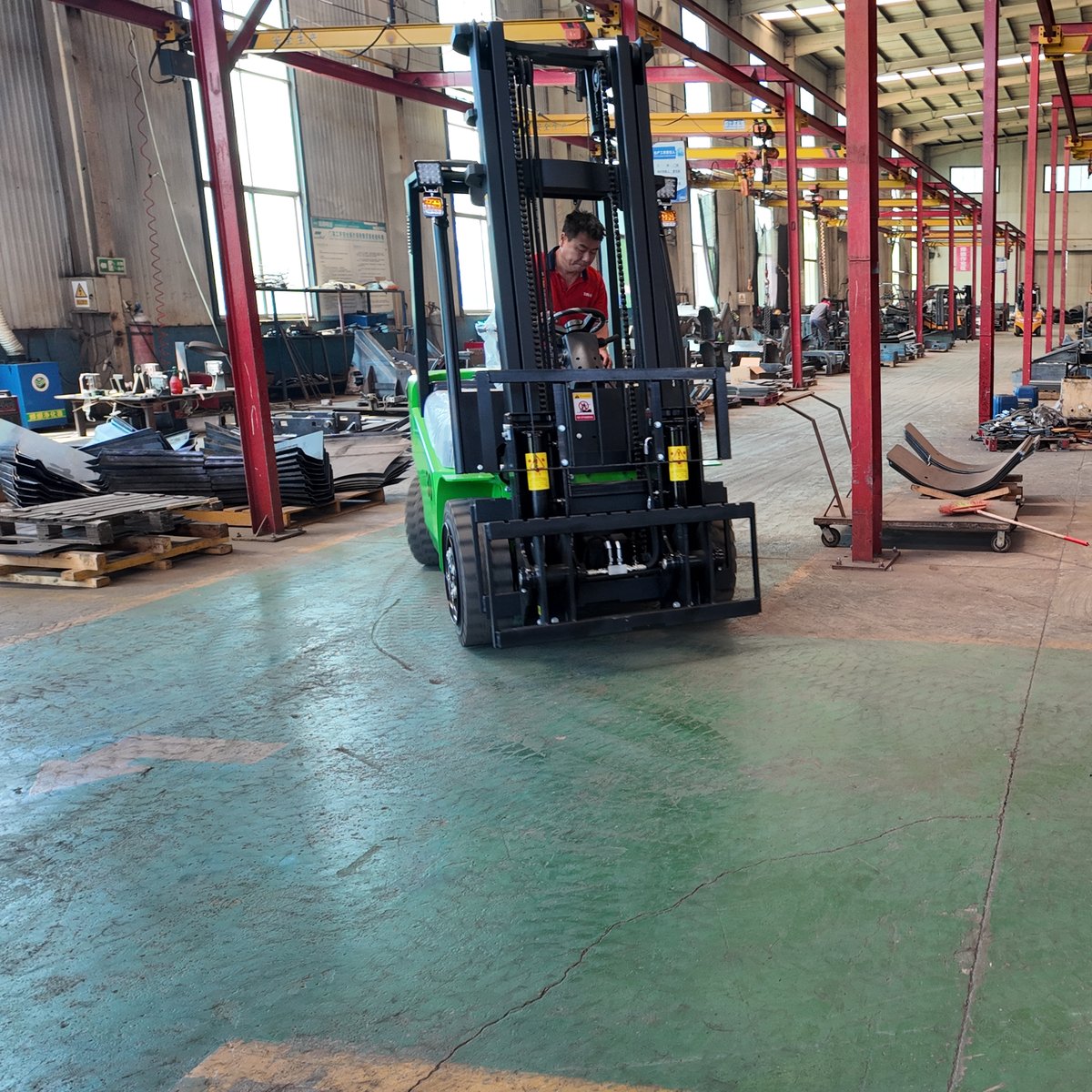
If you have the opportunity to see a machine — at a demonstration, a factory visit, or an inspection before shipment — these are the checks that tell you the most:
Read the data plate first. Model, serial number, rated capacity, load centre, and maximum lift height. Rated capacity is quoted at a standard load centre and lift height; your actual load may derate it substantially. This is the single most common specification misunderstanding in forklift purchasing.
Watch the mast operate through full travel. Smooth throughout, or does it hesitate or judder at any point? Listen as well as watch.
Check hydraulic movements together. Lift and tilt simultaneously — does one starve the other?
Open the panels. Are daily service points reachable? Are filters standard sizes? Does the layout suggest the truck was designed to be maintained, or assembled and forgotten?
Look at the wiring. Loom routing, clamping, and connector quality are visible indicators of assembly discipline, which correlates with the things you cannot see.
Check the welds. Consistent, clean welds on the mast and chassis suggest process control. Rough or irregular welds suggest the opposite.
The Environment Question Nobody Asks Early Enough
Two identical trucks in different environments will not have the same service life, and the difference is often larger than the difference between brands.
Indoors on smooth floors is the easiest life a forklift can have. Trucks in this environment routinely exceed expectations regardless of specification.
Outdoor yards subject the truck to weather, uneven surfaces, and contamination. Sealing, tyre specification, and ground clearance all matter more here, and a truck specified for indoor use will deteriorate faster.
Cold storage affects battery performance, hydraulic oil viscosity, and seal life. It requires specific specification rather than being a condition a standard truck tolerates.
Dusty environments — grain, cement, recycling, timber — attack filtration, radiators, electrical connections, and mast channels. Filter service intervals need shortening and sealing becomes critical.
Corrosive environments — coastal, chemical, fertiliser, food processing with washdown — attack everything. This requires specification for the environment, not a standard truck with more frequent washing.
The practical point: telling a supplier your working environment before they quote produces a different specification than asking for a standard truck and hoping. A truck specified for the conditions it will work in outlasts a nominally better truck that was not.
Frequently Asked Questions
What is the most reliable forklift brand?
There is no single answer, because reliability depends on specification, working environment, and maintenance more than on the badge. Established manufacturers offer greater consistency and denser service networks, which reduces risk. But a correctly specified and well-maintained truck from a competent mid-tier manufacturer routinely outlasts a premium truck specified for the wrong environment. Evaluate the specific truck and supplier against your conditions rather than relying on brand ranking.
How long should a forklift last?
Service life varies enormously with duty cycle, environment, and maintenance. A truck working single shifts on smooth indoor floors with disciplined servicing will run far longer than one working multiple shifts in an outdoor yard. Rather than asking how many hours a truck should last, ask what the wear items are, what they cost, and how easily they are replaced — that determines whether high hours are economical or terminal.
Are Chinese forklifts reliable?
Quality varies by manufacturer, which is why evaluating the specific supplier and specification matters more than the country of origin. A truck with a documented power system, appropriate hydraulic filtration, proper electrical protection, and available parts support is a reliable truck. One with unknown components and no parts documentation is a risk at any price. The evaluation questions in this guide apply regardless of where the truck is built.
What should I check before buying a used forklift?
Hour meter reading against apparent condition, mast operation through full travel, hydraulic cylinder condition and leakage, chain stretch, tyre wear, and — on electric trucks — battery age and condition, which is often the largest single cost item on a used purchase. Ask for service records. Their absence is itself information.
Does a more expensive forklift last longer?
Not automatically. Premium pricing buys consistency, service infrastructure, residual value, and refinement. Longevity comes from specification matched to the working environment and from maintenance discipline — both of which can be achieved at mid-tier pricing, and neither of which a premium badge guarantees on its own.
Specifying a Truck That Lasts
The specification questions matter more than the brand question, and they start with telling the supplier what the truck will actually do:
Information to include with your enquiry
- Application (indoor / outdoor / mixed)
- Surface conditions
- Daily operating hours and shift pattern
- Heaviest load and load centre
- Required lift height
- Environmental conditions (dust / moisture / cold / corrosive)
- Power preference (diesel / lead-acid / lithium / undecided)
- Attachments required
- Destination country and port
- Expected quantity
Send that and we will specify against the conditions rather than sending a standard configuration — including telling you where a specification you asked about is not appropriate for your environment.
We are happy to answer every question in the evaluation section above about our own trucks, in writing, before you order.
Want a forklift specified for long service life? Send your duty cycle, load, lift height and working environment to HONGLI for a matched configuration and written component details.